
STEM Climate Education
- Lorna Salamán Jorge

- Mar 23
- 5 min read
There are issues that are already part of everyday life. Climate change is one of them. It is perceived in the temperatures, the most frequent extreme events and the way in which communities begin to adapt to new conditions. In this scenario, education plays a decisive role because it directly influences how the next generations understand what is happening and how they respond.
Climate education offers a real opportunity to develop understanding of complex systems, strengthen evidence-based analysis, and promote informed responses. From there, the STEM approach is especially relevant, as it integrates scientific knowledge, use of data, design of solutions and connection with the immediate environment.
Talking about STEM climate education means recognizing the moment we are living in and betting on training that allows us to better understand the present and build more conscious responses to the future.

What is STEM climate education
STEM climate education integrates science, technology, engineering, and mathematics to understand how climate systems work and how they relate to daily life. It allows us to observe phenomena, analyze information and build explanations from evidence.
From the STEM approach, learning is connected to real situations. Students work with data, identify patterns, and develop proposals that respond to their environment. Climate is approached as a dynamic system that can be studied, interpreted, and modeled.
It also involves a different way of organizing learning: disciplines connect, context matters, and decisions are based on information. This opens up space to explore, question and design meaningful responses, integrating understanding and application in the same process.
From learning about climate to working with climate
STEM climate education makes sense when learning connects with real situations. Exploring climate from direct experience allows us to observe changes, ask questions and build explanations from evidence. This perspective brings the content closer to the immediate environment and strengthens understanding.
In different environments, students have researched local conditions to understand how climate influences their daily lives. Experiences such as those documented by UNICEF show how working with real data arouses interest and fosters deeper learning.
This process opens up space for student initiative. By analyzing information, discussing findings, and proposing ideas, students actively participate in building knowledge and finding answers.
GLOCAL: understanding the world from the territory
The GLOCAL approach is based on a simple idea: to understand global processes based on situated experiences. In STEM climate education, this involves working on the climate by connecting scientific knowledge with what happens in the nearby environment, where changes are observed and experienced directly.
GLOCAL allows the issue to be addressed more clearly. Concepts such as temperature increase, climate variability or pressure on ecosystems are better understood when they are related to local environmental situations such as heat in urban areas, water quality or changes in vegetation.
A clear example is the Sandwatch program, implemented in coastal communities in different regions, including the Caribbean. In this case, students work directly on local beaches, where they observe changes in erosion, biodiversity and water quality. Based on these observations, they collect data, analyze it, and develop actions to protect the environment.
Likewise, initiatives such as The Fairchild Challenge have promoted projects in which students design solutions related to sustainability, from the creation of habitats to proposals for resource management. The experiences of the challenge integrate science, design and communication. They also allow participants to work on local environmental issues and broadly incorporate the climate issue.
Working from the glocal perspective allows us to build knowledge with direct relevance to the community, and at the same time maintain a broad understanding of the climate phenomenon.
What it looks like in practice: Integrating STEM climate education
When climate education enters the STEM work, learning gains direction. The disciplines begin to relate around issues that students recognize, observe, and experience. In Puerto Rico, that possibility is of enormous value because many of the issues associated with climate are part of the country's daily experience. This gives the teacher an important pedagogical advantage: relevance already exists.
Heat is one of the most obvious examples. In many schools and communities it is felt intensely, especially in urban areas with few trees and an abundance of paved surfaces. That phenomenon offers a powerful input for working on scientific observation, measurement, data analysis, and interpretation. It also opens up conversations about materials, shade, greenery, and well-being. The theme begins to link science, mathematics, technology and design in a natural way.
The coast brings another particularly powerful dimension to an island. Erosion and changes in the beachfront and the pressure on coastal systems allow for the development of experiences with great relevance for the country. This type of observation helps to build a more accurate look at Puerto Rico and the relationship between natural systems, human activity, and transformation of the territory.
From teaching practice, effective integration begins with a well-selected question. It should be clear, close, and broad enough to allow for observation, analysis, and discussion. A question like what areas of our school or community get the hottest and why? It offers a solid starting point. From there, the teacher can organize an experience where students observe different spaces, gather information, compare surfaces, record the presence or absence of shade and vegetation, and discuss patterns that emerge from the data. In this example we see how climate education provides continuity and is an excellent opportunity to research, analyze and build greater evidence-based understanding.



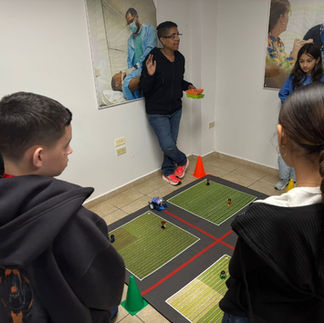


For the teacher, this paradigm enriches planning because it allows starting from a specific situation in the country and turning it into a transcendental academic experience. A topic such as coastal transformation, for example, can be worked on from images, maps and field observations, or photographic documentation to examine visible processes related to erosion, biodiversity, land use, infrastructure and conservation. Throughout this experience, science provides explanations about what is happening, mathematics allows us to identify patterns and contrasts, technology makes it easier to record, organize and visualize information, and engineering opens up space to think about adjustments, alternatives or proposals. All this can be developed while keeping the curricular objectives in perspective, with an important advantage: students better understand the reason for what they learn because they connect it with real processes that are part of the country in which they live. Therein lies one of the most valuable contributions of STEM climate education for Puerto Rico: integrating academic rigor with matters of relevance, strengthening the relationship between disciplines, and expanding the way in which territory and shared responsibility are understood.
What STEM climate education brings
STEM climate education also leaves a deep mark on students' education because it cultivates skills that are needed beyond school. By working with real problems, students strengthen critical thinking by inviting them to observe carefully, interpret evidence, contrast information, and sustain well-founded ideas. It also boosts creativity, since many of the situations that arise around the climate require imagining possibilities, adjusting proposals and thinking flexibly. Added to this is collaboration, which becomes valuable when learning is organized around shared questions, group analysis and collective construction of answers. These experiences bring greater awareness of the territory and the relationship between common well-being and sustainability.
This training requires students capable of understanding complex phenomena, reading data and actively participating in the construction of a more prepared and responsible country with its resources. STEM climate education supports rigorous and reality-connected training. It also helps to form a conscious, informed and committed view of the country we are called to support.


Comments